30
Sep
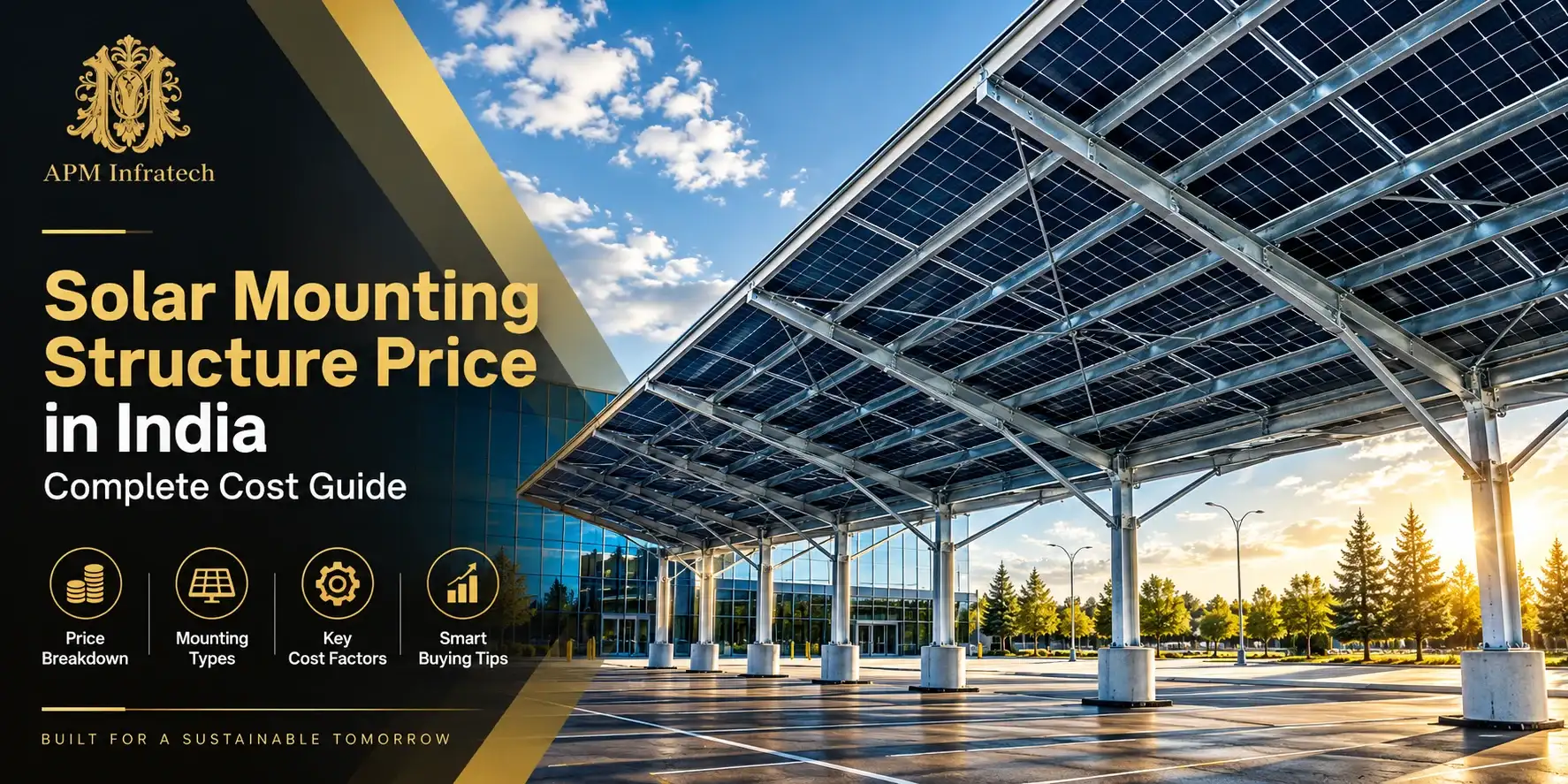
Solar Mounting Structure Price in India: Complete Cost Guide
If you are comparing solar-project quotations, the mounting structure deserves close attention. It carries every module for decades and transfers wind, dead and maintenance loads to the roof or ground. A low quote can become expensive if it relies on thinner sections, inadequate bracing, weak fasteners or unsuitable corrosion protection.
The solar mounting structure price in India is not a single catalogue figure. It changes with the mounting system, material grade, section thickness, plant capacity, height, wind zone, roof or soil condition, coating, foundations, hardware, freight and installation scope. Two quotations expressed at the same rate per watt may cover very different technical specifications.
For budgeting, a straightforward fixed-tilt rooftop structure may commonly fall around ₹4 to ₹8 per watt. Engineered industrial rooftops, elevated structures and ground-mounted systems can range from ₹7 to ₹18 per watt or more. Carports, high-rise installations and difficult sites can exceed these bands. These are indicative ranges, not an APM Infratech quotation; final pricing requires site inputs, drawings and a defined bill of quantities.
This guide explains how solar structure cost is calculated, what different systems may cost, how to compare vendor offers and what information you should provide to receive an accurate commercial proposal.
Solar Mounting Structure Price in India
For early budgeting, buyers may use the following broad ranges. Prices can vary with steel rates, coating specifications, taxes, project location and installation scope.
| Structure type | Indicative price range | Typical application |
|---|---|---|
| Standard low-height rooftop structure | ₹4-₹8/W | Homes, offices and uncomplicated RCC or metal roofs |
| Industrial rooftop structure | ₹6-₹12/W | Factories, warehouses and large commercial roofs |
| Elevated rooftop structure | ₹10-₹20/W | Terraces requiring usable space below the array |
| Fixed-tilt ground-mounted structure | ₹7-₹15/W | Captive plants, institutions and solar farms; foundations may be separate |
| Ballasted structure | ₹7-₹14/W | Flat roofs where controlled or minimal penetration is preferred |
| Solar carport structure | ₹15-₹30/W or more | Parking areas with larger spans and architectural requirements |
| Tracker-compatible structure | Project-specific | Utility-scale projects using moving assemblies and controls |
For a 100 kW project, even a difference of ₹2 per watt changes the structure budget by ₹2 lakh. Buyers should consequently compare the design basis and scope, not only the headline rate.
What Is Included in a Solar Mounting Structure?
A solar mounting structure is the framework that holds photovoltaic modules at the required orientation, tilt and clearance. It may include columns, rafters, purlins or rails, bracing, base plates, module clamps, jointers, anchors, nuts, bolts and protective finishes. Ground systems also require a soil or foundation interface; rooftop systems must connect safely without creating leakage or load problems.
It should maintain alignment, permit maintenance, resist site-specific loads and manage dissimilar-metal contact. Its geometry also affects shading, drainage and module replacement.
APM Infratech provides solar structure options for rooftop, ground-mounted, industrial, ballast and carport applications, along with GI, pre-GI, hot-dip galvanized, Galvalume, POSMAC, MS and stainless-steel solutions and related clamps, base plates, fasteners and purlin components. The appropriate configuration depends on the project rather than a universal specification.
How Is Solar Structure Price Calculated?
Suppliers may quote per watt, kilowatt, kilogram, module or as a lump sum. Comparison begins by converting every offer to the same scope.
Structure budget = project capacity in watts × accepted structure rate per watt
For example, a 100 kW industrial rooftop structure quoted at ₹8 per watt produces a base structure value of approximately ₹8,00,000. That figure is meaningful only after confirming whether it includes engineering, steel, coating, clamps, fasteners, packing, transport, unloading, installation, roof work, foundations, GST and testing.
A per-kilogram quotation helps with fabrication procurement, but weight alone does not establish value. Review member sizes, grade, geometry, connections, corrosion protection and calculations together.
Solar Structure Price by Mounting Type
1. Standard Rooftop Solar Structure
A low-height fixed-tilt rooftop frame is generally the most economical option on an accessible, suitable roof. The typical price may be around ₹4 to ₹8 per watt. Metal-sheet roofs may use rails and roof-specific clamps; RCC roofs may use anchored or ballasted arrangements.
Multiple levels, obstructions, weak zones or restrictive access increase cost. Roof substrate, waterproofing, edge zones, drainage and permissible point loads must be considered.
2. Industrial Rooftop Solar Structure
Industrial rooftops may require longer spans, heavier members and project-specific attachments. An indicative ₹6 to ₹12 per watt is a useful early band, while large repetitive projects may gain economies of scale.
Factories should provide roof drawings so the added dead load and uplift forces can be checked. Skylights, vents, safety access and operating restrictions also affect price.
3. Elevated Rooftop Structure
An elevated structure preserves usable space below the modules. Taller columns, extra bracing and stronger connections can push pricing to ₹10 to ₹20 per watt or more. Greater height can substantially increase wind and connection forces.
The quote should state clear height, column grid, design wind basis and whether pedestals, waterproofing, ladders or walkways are included.
4. Ground-Mounted Solar Structure
Fixed-tilt ground systems commonly budget at ₹7 to ₹15 per watt for the structural package, but soil and foundations can shift the total sharply. Rock, weak soil, high water or uneven land may require different civil solutions. Scale can reduce fabrication cost per unit.
Confirm whether geotechnical work, pile tests, foundations, grading, erection and survey alignment are included. Ex-factory steel cannot be compared with a fully installed system.
5. Ballasted Solar Structure
Ballasted systems use calculated weights rather than extensive roof penetration. They can protect waterproofing but add dead load and require uplift and sliding checks. Budgeting may fall around ₹7 to ₹14 per watt, excluding unusual strengthening.
Excess ballast can overload a roof; insufficient ballast can allow movement. Roof friction, parapets, wind exposure, layout and drainage influence the design.
6. Solar Carport Structure
A solar carport supports the array and covers parking. Large spans, vehicle clearance, drainage, finishes, foundations and impact protection make it more expensive. Prices often begin around ₹15 to ₹30 per watt and may rise for cantilevers or architectural requirements.
Define bay dimensions, clear height, columns, vehicle circulation and drainage before seeking a firm price.
Solar Structure Price by Material and Coating
Pre-Galvanized Steel
Pre-GI sections are formed from galvanized sheet or coil and are widely used for rooftops. Pricing depends on thickness, coating mass, punching and connections. Cut edges and drilled areas require proper treatment.
Hot-Dip Galvanized Steel
Hot-dip galvanized components receive a zinc coating after fabrication and are often selected for demanding outdoor conditions. Initial cost may exceed basic painted or light pre-GI alternatives, but lifecycle protection matters. Specify the coating requirement, inspection and treatment of site modifications.
Galvalume and POSMAC-Type Coated Steel
Specialized metallic-coated steels can support corrosion resistance and optimized sections. Price depends on coating, availability, thickness and fabrication. Request coating documentation, traceability and compatible fasteners.
Aluminium
Aluminium is lightweight and corrosion resistant, making it common for rails and clamps. Its per-kilogram price is generally higher than carbon steel, although easy handling can reduce erection effort. Dissimilar metals require suitable isolation.
Mild Steel and Stainless Steel
Painted or coated MS can be economical, but surface preparation and maintenance matter. Stainless steel offers strong corrosion resistance for hardware or specialized environments at a premium.
What Factors Change the Solar Mounting Structure Price?
Structural Design and Wind Load
Wind uplift and lateral pressure often control design. Capacity depends on location, building height, terrain, roof edges, tilt and array geometry. Coastal or cyclone-prone sites may require stronger members and connections. A quote prepared without location, height and layout is only preliminary.
Steel Grade, Section Thickness and Total Weight
Steel grade, yield strength, thickness and tonnage affect cost, but optimization must remain calculation-led. Unchecked reductions can weaken performance; unnecessary weight can burden the roof and budget.
Corrosion Environment and Design Life
Inland rooftops, coastal plants and chemically aggressive sites have different exposure. Coating, drainage, cut-edge protection and fasteners should match the environment and service life.
Height, Tilt and Row Spacing
Higher columns use more steel and attract higher wind forces. Tilt affects geometry, bracing and shading; terrain and table size matter on ground projects. Coordinate structural and generation decisions.
Roof or Soil Condition
Rooftops may require pull-out tests, waterproofing, special clamps or reinforcement. Ground projects may need geotechnical work, pile trials, concrete and grading. These can sit outside the steel price.
Project Scale and Standardization
Larger projects distribute design, tooling and mobilization across more capacity. Repetitive tables lower the per-watt rate; fragmented roofs and changes reduce that advantage.
Freight, Access and Installation
Distance, truck use, packaging, unloading and storage affect delivered cost. Restricted access, cranes, permits and live operations raise installation cost. GST and insurance should be identified.
Illustrative Cost Examples by Project Capacity
The following examples show how budgeting works; they are not quotations.
| Project | Assumed structure rate | Illustrative structure budget |
|---|---|---|
| 10 kW standard rooftop | ₹5-₹8/W | ₹50,000-₹80,000 |
| 50 kW industrial rooftop | ₹6-₹10/W | ₹3,00,000-₹5,00,000 |
| 100 kW industrial rooftop | ₹6-₹10/W | ₹6,00,000-₹10,00,000 |
| 500 kW fixed ground mount | ₹7-₹12/W | ₹35,00,000-₹60,00,000 |
| 1 MW fixed ground mount | ₹7-₹12/W | ₹70,00,000-₹1,20,00,000 |
Foundations, civil work, special access, freight, installation and taxes may be included, excluded or partly included. The bill of quantities and commercial exclusions decide whether these numbers are comparable.
Costs Buyers Often Miss
Commonly missed items include calculations, site measurement, roof verification, geotechnical or pull-out tests, foundations, anchors, clamps, fasteners, waterproofing, access equipment, unloading, storage, erection, coating repairs, inspection, wastage and taxes.
Incomplete information also creates commercial risk. Changed module dimensions or civil levels can force rework. A thorough request for quotation reduces variations and delays.
How to Compare Solar Structure Quotations Correctly
Do not select a vendor from the per-watt rate alone. Use a comparison sheet that captures the following points:
- Design basis: project location, wind criteria, terrain, building height, module layout, tilt and service assumptions.
- Material specification: steel or aluminium grade, section sizes, thicknesses and estimated weight.
- Corrosion protection: coating type, coating requirement, cut-edge treatment and fastener compatibility.
- Scope boundary: design, fabrication, clamps, bolts, foundations, freight, unloading, installation, testing and GST.
- Documentation: drawings, calculations, material test certificates, coating reports, inspection records and bill of quantities.
- Execution plan: lead time, packaging, site supervision, installation responsibility and handover process.
- Commercial terms: price validity, payment milestones, warranty coverage, exclusions and change-control process.
A technically complete quote may appear more expensive but include work omitted from a cheaper offer. Normalize every bid before making a commercial decision.
How to Reduce Cost Without Reducing Structural Safety
Cost optimization should begin with information and design, not arbitrary material reduction. Freeze the module make and dimensions early. Share reliable roof drawings, site coordinates and layouts. Standardize table sizes where practical, coordinate attachment locations with the building grid and approve drawings before production. For ground projects, complete soil investigation before finalizing the foundation basis.
Procurement teams can also request value-engineered alternatives from the supplier. A different section profile, table configuration or coating system may reduce fabrication and installation cost while meeting the same design requirements. Bulk scheduling and consolidated dispatches may lower freight, while planned site access can reduce crane and labour idle time.
The unsafe shortcuts are easier to recognize: undocumented steel substitution, thinner members without revised calculations, inadequate bracing, fewer fasteners, incompatible metals and unverified coating. Saving a small amount on the supporting structure is not worthwhile if it exposes modules, people, the roof or project generation to avoidable risk.
Information Required for an Accurate Price Quote
To receive a useful solar mounting structure price rather than a broad estimate, provide:
- Project capacity and site address or coordinates
- Application: RCC rooftop, metal roof, ground mount, ballast, elevated or carport
- Module make, wattage, dimensions, quantity and orientation
- Proposed layout, tilt, row spacing and clear height
- Roof drawings and sheet or purlin details, or soil and topographical data
- Corrosion environment and preferred material or coating
- Design life and applicable project specifications
- Delivery schedule, packaging and unloading requirements
- Supply-only or design, supply and installation scope
- Documentation, inspection and warranty expectations.
When these inputs are unavailable, ask for a preliminary budget and state the assumptions. The final order value should be tied to approved drawings and a frozen bill of quantities.
Why Work with APM Infratech?
APM Infratech combines solar-structure capability with heavy-engineering execution experience. The company supports industrial, commercial and residential projects through site evaluation, structural planning, fabrication, delivery, assembly, alignment and final inspection. Its portfolio includes rooftop, ground-mounted, industrial, ballast and carport structures, multiple coated-steel options and essential mounting accessories.
For procurement teams, this breadth helps create one coordinated discussion around structural type, material, components and installation scope. APM Infratech states that it follows ISO 9001:2015 quality processes and provides nationwide supply, installation, warranty and after-sales support. The practical advantage is not a generic low rate; it is a quote aligned with project conditions and clearly defined deliverables.
Frequently Asked Questions
1. What is the average solar mounting structure price in India?
A standard rooftop system may broadly cost ₹4 to ₹8 per watt, while industrial, elevated, ground-mounted and carport solutions generally cost more. The final rate depends on engineering loads, material, coating, height, foundations, freight and installation. Use market ranges for budgeting only and obtain a project-specific quotation before procurement.
2. What is the solar structure price for a 10 kW system?
At an indicative ₹5 to ₹8 per watt, the structure budget for a straightforward 10 kW rooftop installation may be around ₹50,000 to ₹80,000. An elevated, carport or difficult-roof solution may cost considerably more. Confirm whether clamps, fasteners, transport, installation, taxes and waterproofing are included.
3. Is solar mounting structure pricing calculated per watt or per kilogram?
Both methods are common. Per-watt pricing is convenient for project budgeting, while per-kilogram pricing helps evaluate fabricated steel supply. Neither method is sufficient without drawings, member specifications, coating requirements, quantities and scope. A lump-sum installed quote should also carry a detailed bill of quantities and exclusions.
4. Which material offers the best value for a solar structure?
There is no universal winner. Pre-GI or hot-dip galvanized steel often provides a practical balance of strength, availability and cost. Aluminium can reduce weight and simplify rooftop handling. Galvalume and specialized coated steels suit selected systems, while stainless steel is valuable for certain hardware or aggressive environments. Site exposure and design life should guide the choice.
5. Why is an elevated solar structure more expensive?
Elevation requires taller columns, more bracing, stronger connections and greater installation effort. It can also increase wind forces and foundation or roof-interface demand. The additional cost creates usable space below the panels, but the height and grid must be defined before a reliable price can be prepared.
6. Are foundations included in ground-mounted solar structure cost?
Not always. Some vendors quote fabricated steel only; others include piles, concrete, ramming, testing and erection. Because soil conditions can significantly affect foundation design, buyers should request a separate foundation line item and identify the geotechnical basis used in the quotation.
7. Does a lower per-watt price mean a better deal?
Only when the technical and commercial scope is identical. A lower rate may exclude engineering, coating, fasteners, freight, installation or civil work. It may also use different thicknesses or design assumptions. Compare normalized bills of quantities, calculations, certificates, warranties and exclusions before selecting a supplier.
8. How long does it take to manufacture and install a solar structure?
Lead time varies with approved drawings, tonnage, coating, project size and site readiness. Small standardized rooftop projects can move quickly, while industrial and ground-mounted work requires more engineering and logistics. APM Infratech notes that typical residential or commercial rooftop installation may take roughly three to ten days, subject to size and conditions; fabrication and delivery must be planned separately.
9. How can I get an exact solar panel structure price from APM Infratech?
Share the project capacity, site location, module datasheet, layout, roof or soil details, required height, preferred material and the desired supply or installation scope. APM Infratech can then assess the requirements and prepare a project-specific proposal instead of relying on a generic rate.
Get a Project-Specific Solar Structure Quote
The right solar structure is not simply the least expensive frame; it is the system that meets the site loads, protects the installation and remains commercially sensible over its service life. APM Infratech can help you evaluate the appropriate rooftop, ground-mounted, industrial, elevated, ballast or carport configuration and prepare a transparent quote based on your actual scope. Share your capacity, module layout, site location and structural requirements with the team to receive a detailed price proposal., visit the APM Infratech contact page to request a free consultation and quotation.